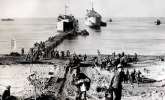
My uncle, John Mackwood, was a Japanese POW both in the Changi Camp in Singapore and on the notorious death railway in modern-day Thailand.
He was in the camp with the great artist and cartoonist Ronald Searle (1920-2011) and my uncle John, having been at theatre school, took an active interest in the plays that the POWs put on in Changi.
I have copies of several programme covers of those plays with titles such as In Clink Tonight, Khaki on Parade and Dover Road. In one play, R C Sheriff’s Badger’s Green, in March 1942, Lieutenant J L Mackwood played Mr Twigg and Ronald Searle was billed as Scenic Artist.
My parents – my father, Charles, was John’s elder brother – encountered a man on a ship coming home from Ceylon, where he was a director of the family business, who remembered John in the camps. He told my father that he should be proud of his brother – for he had been marvellous and had put on plays alongside Ronald Searle and others to keep up morale.
It’s extraordinary to think how these young prisoners, on starvation rations, could summon the energy to stage plays – billing themselves as The Palladium Players – and go to the trouble of printing programmes on battered typewriters. They must have been a great boost to the morale of the captive audiences and given the actors and producers something to do to kill the boredom of early camp life.
Twenty-five musicians put on a performance in Changi of Schumann’s music, attended by 500 ‘concert-goers’. How did they rescue their instruments and how did they survive in the corrosive tropical climate? Where did they get the sheet music?
Changi Prison was constructed for 600 prisoners, but the Japanese crammed 5,000 people into it. Still, it was a doddle compared with the horrors of work on the notorious Burma Road railway.
In the camp, Ronald Searle risked torture, beatings and probably death by sketching the scenes he saw before him. These included gruesome pictures of severed heads of ‘unco-operative’ Chinese and Malay civilians stuck on poles by the victors as a warning after the capitulation by Britain and her allies.
In Searle’s book To the Kwai – and Back: War Drawings 1939-1945, remarkable ink or charcoal sketches show the various portraits of his Japanese and Korean guards.
There are disturbing pictures of brutality meted out to the prisoners, juxtaposed with images of mundane camp life, with skeletal prisoners resting on camp beds or dying of cholera.
Searle wrote, ‘At this point in our lives, some sort of philosophical outlook was desirable, for one great curse of prison life is that it allows too much time for reflection.
‘We had been prisoners for more than two years. But, in this seasonless part of the world, time had no particular meaning any more and the future was a great big blank.’
Uncle John did not speak much about the camps. But he did say to my father that the behaviour of the wicked schoolgirls in Searle’s inspired girls’ school, St Trinian’s, was taken from the Japanese – even if the high jinks of the roguish girls of St Trinian’s are as far removed as can be from the horrors of those camps.
After the camp, Uncle John went on to be a successful BBC radio anchorman at the United Nations in New York, broadcasting to the world. He became an inaugural presenter on Southern Television, then called Rediffusion.
His civilian life, like that of so many other of his fellow JPOWs, was sorely marked by five brutal years in the camps, where they saw unimaginable suffering, death, disease and brutality. He had a chequered life.
As a journalist, I kick myself for not sticking a tape recorder under John’s nose and asking him about his time spent as a young man in those hellholes. It would have made an important record for his children.
While I was leafing through Searle’s book of war drawings, out popped a poem by my uncle called ‘Japanese POWs Went to Church on Sundays’. Here is the first stanza:
There was nothing else to do
On this day, Sunday. On any other day, what did it matter?
All days were same days to all of us,
But on Sundays there was
entertainment –
The actors, dedicated men would rise
and speak to us.
We forget now what they said,
But it was something most of us had
heard before. Somewhere, sometime, there before –
On Sundays.
And here’s the final verse:
We don’t know why this was
We only know that we, who live,
We live embittered and in pain.
One day, these memories will leave us,
But until that time, please God,
forgive us –
We will never go to church –
On Sundays.
Enjoy The Oldie every month. Subscribe to The Oldie.